Jul 23, 2010

SUZHOU

Suzhou is a 2,500-year-old city renown the world over for its traditional gardens, ancient canals , and silk production. We had a boat ride down one of their canals(a little stinky) and toured a beautiful old home and its lovely gardens and ponds. At the silk factory we actually saw silk worms, their cocoons, spinning their cocoon silk into fabric and the final fabrics. It's amazing what beauty a little silk worm helps create!

SHANGHAI-"CITY OF THE FUTURE"

Shanghai is called the "city of the future" because it is tearing down the old and quickly building the new. There are 17 million people who live there! As you know, my daughter Amy is one of them. She moved there 2 years ago and works for an advertising company. She loves meeting the interesting variety of people and the energy of this huge city. She met my tour group at the Shanghai Acrobats show.


The next day we toured the city in the rain(so it was a little gray & wet) and were in awe of the immense buildings. We went up on top of the Jinmao Tower(88 stories tall) to look out over the city. It will soon be only the 3rd tallest building in Shanghai! And, of course I had to visit the the Shanghai Museum where I enjoyed their ancient money exhibit.So much to see and so little time!!

THE WORLD EXPO IN SHANGHAI


Shanghai was hosting the World Expo, where countries from around the world set up exhibits. The theme was "Better City, Better Life", so the countries were showing how they were planning "greener", less polluted cities. Amy's company worked on the Great Britain exhibit. It was called the "Seed Cathedral" and looked like a giant dandelion flower!
It was built with 60,000 acrylic rods and each one had different seeds on the end. There were a million people there that day so it was a little hard to see all of the exhibits. Oh, look at the sign I saw there>>>

Jul 22, 2010

FLYING TO DALI


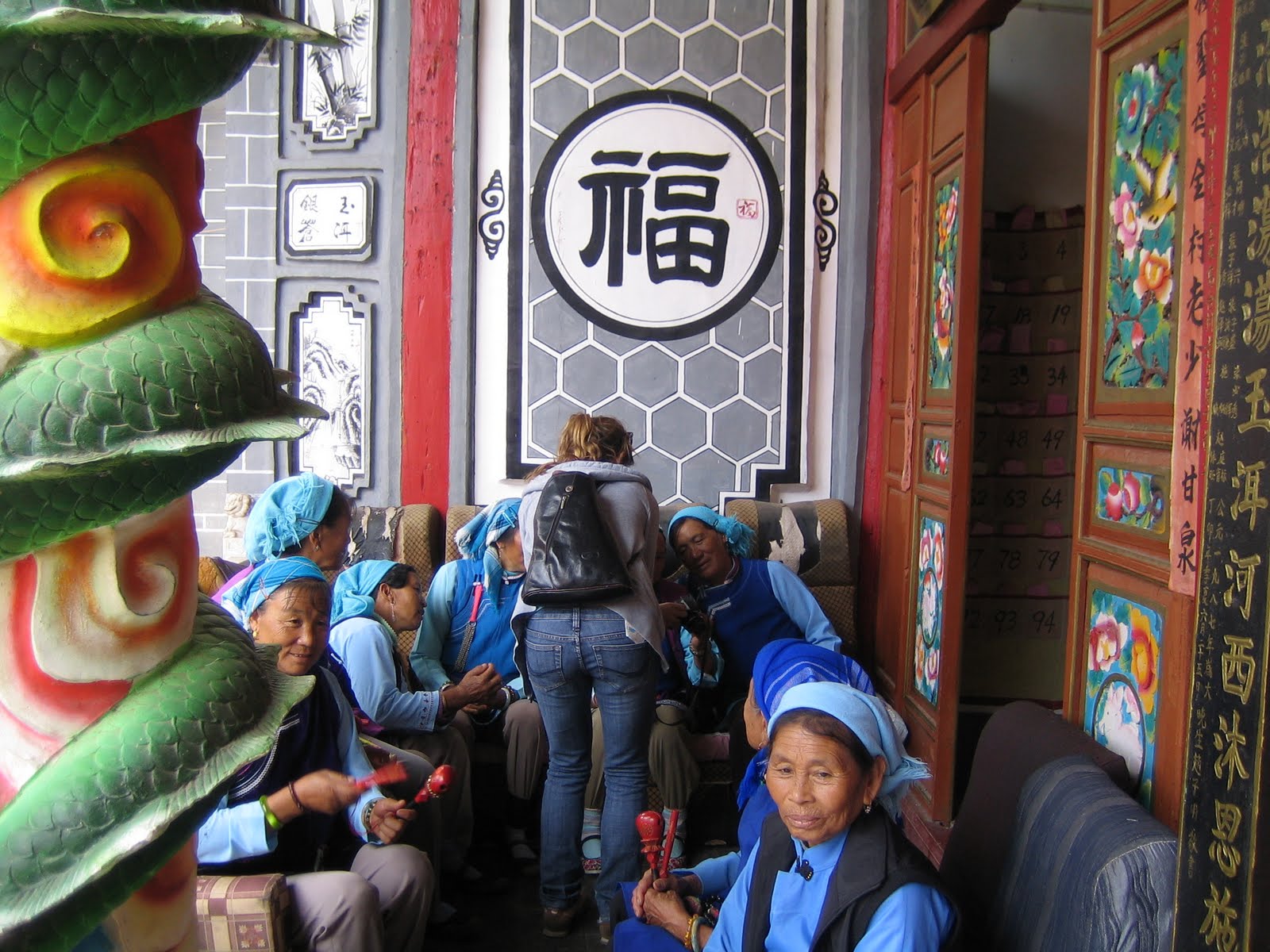
Amy and I took a 4 hour flight from Shanghai to the city of Kunming and then on to Dali Monday night. Dali was our first ancient town in the Yunnan Region in southwestern China. This area is below Tibet and above Vietnam(look on a map) so it was surrounded by the Himalayan Mountains and beautiful lakes and valleys. There are over 25 ethnic minority groups living in this area which makes it a very colorful and unique culture. Our guide, Nancy, wore a traditional costume and it was very beautiful. We stayed in the Ancient City, but the New District was filled with high rises and modern stores.

DALI-ING


Nancy took us to many interesting places, including a fishing village on Erhai Lake. The people were so friendly that they invited us to lunch. I had to laugh when I saw some children in their school yard jumping rope and playing basketball--just like us! However, they go to school 6 days a week for 8 hours each day. In China, they are eager for their children to learn as much as they can so that they can be successful in the new modern world they want to become part of. I found out that besides learning their local language, they learn Mandarin(the national language) and English! Like I said, the Chinese want their children to successful!

DALI

We toured the Three Pagodas Park, which not only had 3 interesting pagodas, but also an immense palace for the emperor.
Can you see it behind me? They certainly had a lot of walking and stairs to climb in those days(and these days too)!


Walking around the streets of Dali we saw kids come home from school and people just doing everyday things.

LIJIANG


We drove 4 hours to the ancient town of Lijiang, known for its many canals and bridges. One interesting thing about Lijiang was that, although it was first built in 476 BC, 14 years ago it was leveled by an earthquake!! The resourceful Naxi people rebuilt it to look the same and it became a huge tourist attraction. There were many people in different ethnic clothing working in the town and it was very colorful and fun.

VILLAGES OF THE LIJIANG AREA


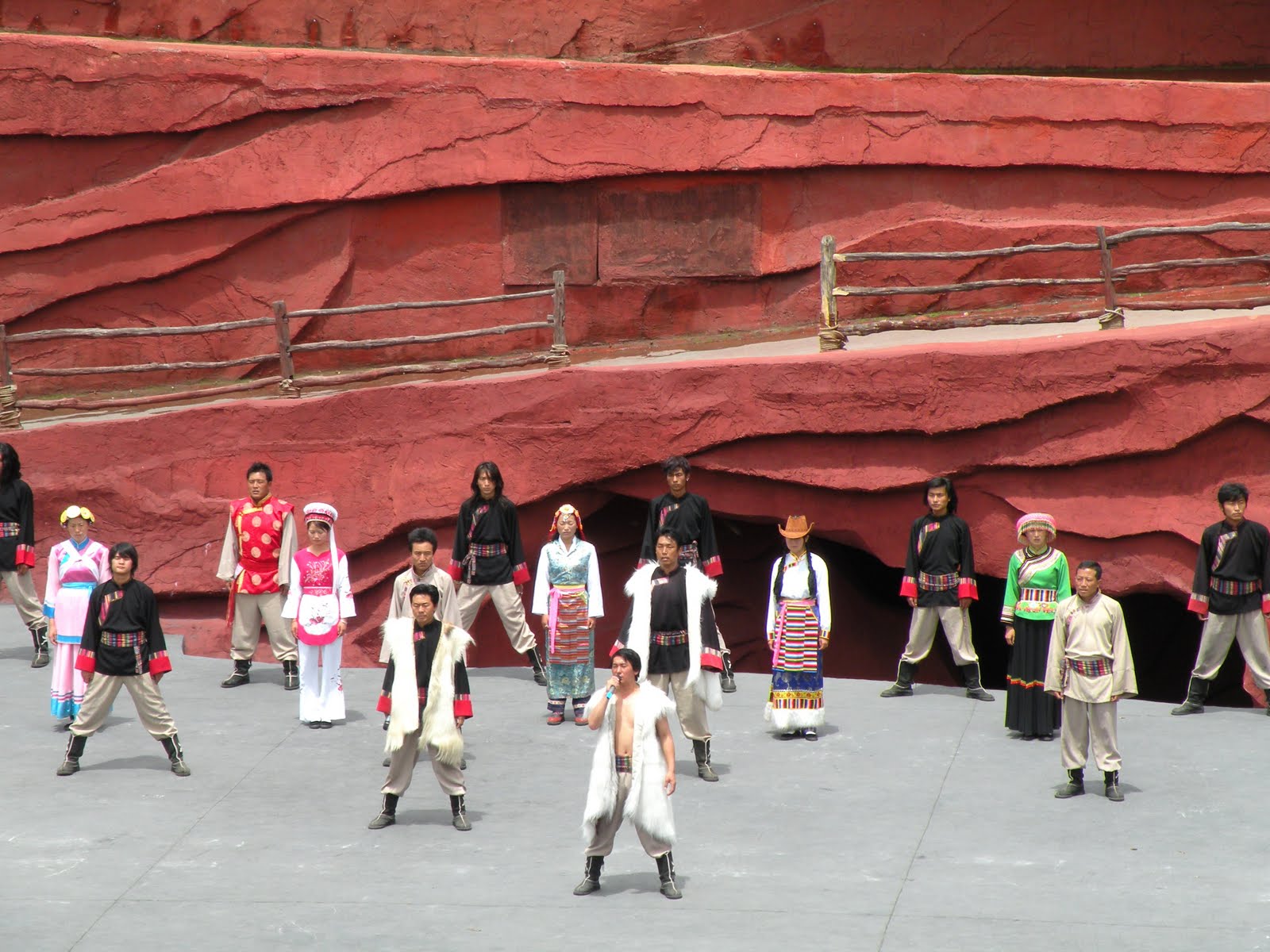
Today we saw a very exciting show with 500 village people and 100 horses! They were acting out the part their villages did in the Tea Horse Trade Road. This area has over 25 different ethnic groups that all worked together in providing goods for trading, The music, dancing, and ethnic costumes were fabulous!

Then we went into the tiny village of Baisha and had tea with local artists. Amy enjoyed speaking Mandarin with them.
We also explored several museums about the different groups that lived in the area and took pictures at the lovely Jade Lake.